
Winter Prep Checklist From a Roofing Contractor in St. Paul, MN
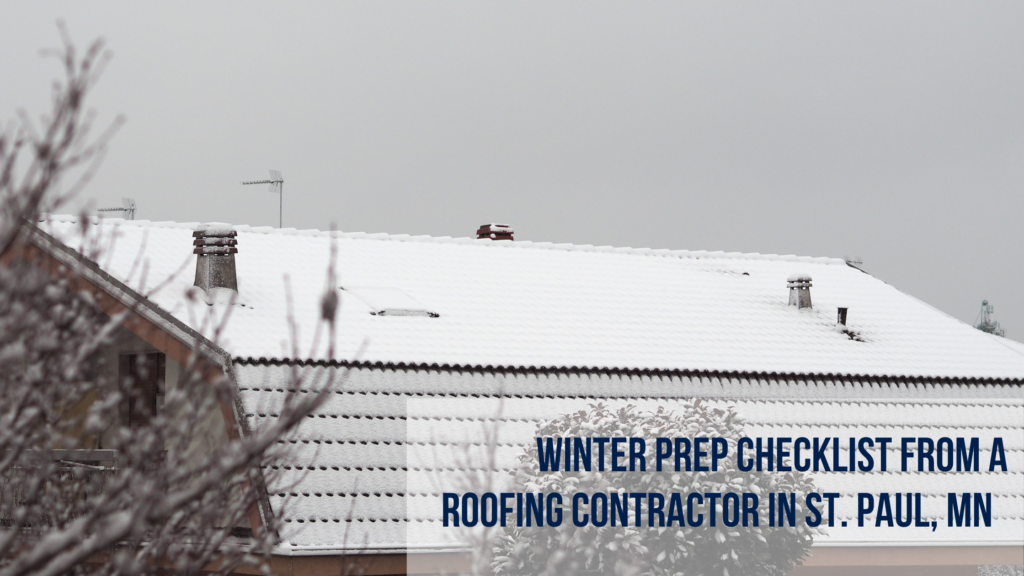
Every October, our phones start ringing with the same question: “Is my roof going to make it through another winter?” Usually, the homeowner has noticed something. A few shingles in the yard after a windy night, or a ceiling stain that showed up last March and never went away. As a roofing contractor in St. Paul, MN, we’ve been on a lot of roofs from Highland Park to Como, and the pattern is consistent. The roofs that cause trouble in January almost always showed small warning signs in the fall. Below is the same checklist our crew walks through on fall inspections, so you can see where your roof stands before the snow sticks. Why Winter Is So Hard on Roofs in St. Paul Minnesota winters don’t just bring cold. They bring constant change. A sunny 35-degree afternoon followed by a single-digit night means snow melts, runs under the edges of shingles, and refreezes. That freeze-thaw cycle repeats all season, and each round pries a little harder at weak spots. Then there’s the weight. Wet, heavy snow piles up fast on low-slope sections, porch roofs, and detached garages. And there are ice dams, the most common winter roofing problem we see in the Twin Cities. Age matters too. Many older homes around Summit Hill and Mac-Groveland have flashing that’s been patched more times than anyone can count. Those roofs can still hold up, but they don’t leave much room for neglect. The Winter Roof Prep Checklist From Your St. Paul Roofing Contractor 1. Inspect Shingles for Hail and Wind Damage Walk around the house and look up. You’re checking for missing shingles, curled edges, cracks, and dark patches where granules have worn off. Then look in your gutters. A heavy layer of granules there means the shingles are wearing out. Hail damage often looks like nothing from the ground. A bruised shingle can hold up all summer, then let water in once ice starts working on it. If hail hit your neighborhood this year and nobody has been on your roof since, get it inspected. 2. Clean and Check Your Gutters and Downspouts Clogged gutters are one of the main reasons ice dams form. Water sits in the trough, freezes, and backs up under the roof edge. Clean them out once most of the leaves are down, and run a hose to make sure downspouts flow. Look for sagging sections, loose hangers, and downspouts that dump water against the foundation. 3. Check Flashing Around Chimneys, Vents, and Skylights Flashing is the metal that seals the joints where your roof meets a chimney, wall, vent pipe, or skylight. On older St. Paul homes, it’s the most common leak source we find. Look for rusted or bent metal, gaps, and dried-out caulk. A ceiling stain near the chimney usually points here first. 4. Look at Attic Insulation and Ventilation A lot of roof problems start in the attic. When warm air from your living space leaks up there, it heats the roof deck from below. Snow melts on the upper roof, runs down to the cold eaves, and freezes. That ridge of ice is an ice dam, and the water pooling behind it can work under the shingles and into your walls. Take a flashlight into the attic on a cold morning. Frost on the underside of the roof deck, damp insulation, or dark stains on the wood all point to a ventilation or insulation problem. 5. Make Sure You Have Ice and Water Shield at the Eaves Ice and water shield is a self-sealing membrane installed under the shingles along the roof edge. It keeps water out when an ice dam forms. Minnesota code requires it on new roofs, but older roofs may not have it. You can’t see it from the ground, so if you’re not sure, have it checked. 6. Trim Overhanging Branches Branches loaded with snow and ice can snap and land on your roof. Even when they hold, they drop leaves into gutters and scrape shingles in the wind. Trim anything hanging over the roof before the ground freezes. 7. Clear Debris and Check for Soft Spots Leaves and pine needles collect in roof valleys and hold moisture against the shingles. From the attic, look for sagging or darkened decking. A soft spot now becomes a much bigger problem with two feet of wet snow on top of it. 8. Plan for Safe Snow Removal A roof rake lets you pull snow off the lower few feet of the roof from the ground, which helps prevent ice dams. Please don’t climb onto a snowy roof or chip at ice dams with a hammer. That usually does more damage than the ice. When to Call a Roofing Specialist in St. Paul, MN Before the Snow Flies Some of this list you can handle yourself. Some of it you shouldn’t. It’s time to bring in a roofing specialist in St. Paul, MN if you notice: A specialist gets up close to check decking, flashing, ventilation, and hail bruising you can’t see from the driveway. Timing matters too. Shingles need reasonably warm temperatures to seal, so late fall is the last good window for most repairs. If you’ve had storm damage, we’ll document it with photos for your insurance claim. Roofing Financing in St. Paul, MN: Don’t Let Budget Delay Critical Repairs A new roof is rarely in the budget, especially right before the holidays. But putting off a needed repair usually costs more. A small leak in November can mean wet insulation, damaged drywall, and a full replacement by spring. That’s why JoNick Construction offers roofing financing in St. Paul MN. It helps when your insurance deductible is high, when a claim payout comes up short, or when the work just can’t wait. We’ll walk you through the options so you can decide what fits. Why St. Paul Homeowners Trust JoNick Construction as Their Roofing Contractor JoNick is a family-owned roofing contractor in St. Paul, MN. We’re a
How Does Roof Replacement in St. Paul, MN Work, From Choosing a Roofing Contractor to Financing the Project?

Nobody plans their year around a new roof. It sneaks up on you. Maybe there’s a brown spot on the bedroom ceiling. Maybe you found three shingles in the yard after last week’s storm. Or an inspector looked up, squinted, and said your roof is “getting up there.” Once you have decided that roof replacement in St. Paul MN is going to be one of the jobs on your to-do list, then you definitely have many questions popping into your mind. Which contractor should I contact? What will happen during the installation process? How will you pay for the whole thing? Actually, this is not as complicated as you think. Once you know how to do it, then it becomes really easy. So, let us get started. Signs That You Need to Replace Your Roof Roofs in Minnesota have it rough. Snow piles up for months. Ice dams form. Then summer brings hail, and the freeze-thaw thing keeps going all spring and fall. Shingles just don’t last as long here as people expect. Things to look for: If you’re nodding at two or more of those, get someone out to look at it. Try to do it before the snow comes. Replacing a roof in St. Paul, MN works much better if it’s done on schedule and not last minute because water is leaking through your ceiling in January. Step 1: Identifying the Right Roofer in St. Paul, MN I promise you that this is more critical than choosing the shingles. Great shingles put on badly will still fail. So when you’re comparing quotes from a roofing contractor in St. Paul, MN, check a few things: A few things that should make you walk away: Why St. Paul Homeowners Trust JoNick Construction JoNick Construction is a family-owned exterior company right here in St. Paul. Jon and Nick run it, and they’ve built the business the slow way, one roof and one happy customer at a time. If you’re planning a roof replacement in St. Paul, MN, this is what they offer: The reviews are worth a read. People keep bringing up the same stuff. Roofs finished in a day. Yards cleaned up better than before. Owners who actually take the time to oversee the project. There was one customer whose historic home required that the built-in gutter be re-made during the roofing process – which involved welding, stucco workers, and siding guys. They pulled it off. They also do siding, seamless gutters, decks, and storm repair. So if more than your roof needs work, it’s one call. Step 2: The Inspection and Estimate Any solid roof replacement in St. Paul, MN starts with somebody climbing up and taking a real look. Usually it goes something like this: Take your time reading it. If something’s confusing, ask. A decent contractor won’t mind. Step 3: Roofing Contractor Installation Services in St. Paul, MN, What Install Day Looks Like People always ask what roofing contractor installation services in St. Paul, MN look like in real life. Roughly: For a normal-sized house? One or two days. Weather can push that, of course. Step 4: Home Improvement Financing in St. Paul, MN, How to Pay for It Okay, the money. A roof replacement in St. Paul, MN isn’t cheap; no point pretending. But there are a few ways to handle home improvement financing in St. Paul, MN: One thing worth saying: try not to go cheap just to hit a budget. A roof that fails early means paying for another one. And since everybody’s finances look different, run it by your bank or a financial advisor. FAQs 1. How long does a roof replacement in St. Paul, MN take? Mostly, it takes just one to two days. It depends on the size of the roof, the slope, or even a rainy week that may increase the duration. 2. Does the insurance policy cover the cost of a new roof? Yes, but it only covers hail or wind damage. There are conditions to meet; you will pay the deductible amount, and if your roof is old and deteriorated, there is no chance. 3. What is the cost of a new roof? It varies depending on several factors. The only real answer comes from an inspection and a written estimate. 4. When should the roofing job be done in St. Paul? In spring or fall, when it’s neither too hot nor too cold. But in case of storms or leaks, ignore the right seasons. 5. Does JoNick Construction offer financing? Yep. They’ve got flexible financing so you don’t have to empty your savings all at once. Conclusion A roof replacement in St. Paul, MN doesn’t need to wreck your month. Know what install day looks like, and pick a way to pay that won’t stress you out. That’s really it. Get those right, and your new roof should last you decades. Want to get the ball rolling? JoNick Construction does free inspections, straight-up written estimates, insurance claim help, and flexible financing. They’re a family team, and they treat your house like it’s theirs. Call or text to set up your free inspection and get a roof that can stand up to whatever a Minnesota winter brings.
How Do You Choose the Best Residential Roofing Company in St. Paul?

You know the moment. A spring hailstorm blows through, the sky clears, and there you are in the driveway, hands over your eyes, trying to figure out if those dark spots on the shingles were always there. Then comes the real question: who do I even call? Finding the best roofing company in St. Paul isn’t as easy as picking the first one that pops up online. Your roof sits over your family, your stuff, everything. And Minnesota doesn’t go easy on roofs. Snow piles up, ice dams form, hail shows up out of nowhere, and the temperature can jump 40 degrees in a day. So yeah, you want someone who actually knows what they’re doing. Here’s how to find them. Why Your Choice of Roofer Matters So Much in St. Paul Think about it. Most of us only buy a roof once, maybe twice if we stay in one house a long time. There’s no practice round. A sloppy job around here usually gives itself away pretty quickly: Get the best roofing company in St. Paul on the job the first time, and you skip all of that. Plus, your attic stays bucket-free. 7 Things to Look for in the Best Roofing Company in St. Paul 1. A Valid Minnesota License and Insurance Honestly, if they can’t show you this, stop there. Any legit roofing contractor in St. Paul, MN, needs a Minnesota residential building contractor license. They should also carry liability insurance and workers’ comp. 2. Real Local Experience Every time a big hail storm hits the Twin Cities, the storm chasers show up. Out-of-state plates, door knocking, fast talk. They rush through jobs, and they’re gone by October. A local crew is a different story: 3. Manufacturer Certifications This one’s easy to overlook. Certified installers get trained by the shingle company itself, and that often means a better warranty for you. Just ask, “Which brands are you certified with, and what warranty does that get me?” 4. Honest Reviews and Proven Work Don’t just look at the stars. Actually read a few reviews, especially the longer ones. What you want to find out: Neighbors talk, and the best roofing company in St. Paul usually has a lot of them saying good things. 5. Free Written Estimate You should be getting estimates with material costs, labor costs, tear-off cost, disposal cost, and an estimated timeline. If it’s simply one line at the bottom with a large number, ask what’s included. And look, I get the temptation, but the cheapest bid isn’t always the deal it seems. Really low prices tend to mean something’s getting skipped. 6. Help with Insurance Claims Tons of roof jobs in St. Paul start with storm damage. A good contractor will climb up, take photos of the damage, and meet your adjuster right at your house. Huge help if you’ve never filed a claim before. 7. Flexible Payment Options Roofs aren’t cheap. No way around that. So ask about roofing financing options in St. Paul, MN, before you assume you have to wait. Putting it off until water’s dripping on the couch costs more in the end. Questions to Ask Before You Sign Anything Write these down or pull them up on your phone when the estimator comes by: Then just listen. A pro answers straight. Someone who hems and haws or changes the subject probably isn’t the one. Red Flags to Watch Out For Nice doesn’t always mean trustworthy. Be ready to walk away if: Why St. Paul Homeowners Trust JoNick Construction If you’re looking for a crew that hits all of the above, JoNick Construction is worth a call. A lot of folks around town would tell you they’re the best roofing company in St. Paul. A few reasons people keep recommending them: They also do siding, seamless gutters, custom decks, and storm restoration. Nice to have one crew you trust for the whole outside of the house. FAQs 1. When do I know that my roof needs repairing or replacing? It comes to missing or curling shingles, numerous gritty granules in your gutter, water stains indoors, and annual appearance of ice dams. If you see all these symptoms, then replacement of the roof is better than repair, especially when it is older than 20 years. 2. When is the best season to install my roof in St. Paul, MN? Spring to fall is a good choice. Shingles will adhere properly to the substrate at higher temperatures, while doing the job in fall gives you time to go into winter prepared. 3. How much time does a typical roof replacement take? A couple of days. It depends on the size, how steep the roof is, and the weather. JoNick Construction gets a lot of home roofs done in a single day. 4. Are there roofing financing options in St. Paul, MN? Yep. Plenty of local contractors offer it, JoNick Construction included. Just compare rates, terms, and fees first. 5. Will my homeowners insurance pay for a new roof? Depends on your policy and what caused the damage. Hail and wind are often covered. Having a contractor who documents everything and meets your adjuster makes the whole thing way less of a headache. Conclusion At the end of the day, finding the best roofing company in St. Paul comes down to some pretty simple stuff. Are they licensed? Local? Certified? Do they treat you like an actual person? Spend your time on that, ask the tough questions, and make sure it’s all in writing. If you’re looking for a small, family-owned company that will treat your home like their own, then check out JoNick Construction. Give us a call or text at 612-545-6622 to schedule your free roof inspection and estimate.
Questions To Ask a Residential Deck Builder in St. Paul, MN

A deck is one of those projects where the contractor matters as much as the lumber. Pick well, and you get a spot to eat, relax, and host for decades. Pick poorly, and you’re dealing with wobbly railings, failed inspections, or boards that cup after a single winter. The trick is knowing what to ask before you sign anything. This guide covers the questions worth bringing to any residential deck builder in St. Paul, MN, plus what a good answer sounds like. Use it as a checklist when you start comparing each deck builder in St. Paul, MN, on your shortlist. Why the Right Questions Matter Minnesota is tough on outdoor structures. Deep frost, heavy snow, humid summers, and big temperature swings all take a toll. A deck that looks great on install day can heave, rot, or loosen if it wasn’t built for those conditions. Questions also show you how a contractor works. A pro answers plainly and shows you paperwork. Someone cutting corners gets vague fast. When you’re comparing deck builder services in St. Paul, MN, how a company responds tells you as much as its price does. Questions About Experience and Credentials Start with who will actually be doing the work. These three questions sort out the pros quickly. Are you licensed and insured? Minnesota requires residential building contractors to be licensed, and you can verify a license with the state. Ask for proof of liability insurance and workers’ comp too. If someone gets hurt on your property and the contractor isn’t covered, it can land on you. Any reliable residential deck builder in St. Paul, MN will hand this over without a fuss. How long have you built decks in this area? Local experience counts. A deck builder in St. Paul, MN who has worked here for years knows the soil, the frost line, and what city inspectors expect to see. Can I see past projects and talk to references? Ask for photos of finished decks, ideally a few years old, so you can see how they’ve aged. Then call a reference or two. Did the crew show up on time? Was the site kept clean? Were problems fixed quickly? Questions About the Build Itself Next, get into how your deck will actually be built. This is where quality hides. Who handles the permit? Most decks in St. Paul need a permit, and an inspection usually follows. Confirm who pulls it and whether the fee is in your price. Skipping the permit can cause real headaches when you sell the house. You can check current requirements with the City of St. Paul, and a good company takes care of it as part of its deck builder services in St. Paul, MN. How will the footings handle frost? Footings need to reach below the frost line, which is typically around 42 inches in Minnesota. Shallow footings are one of the top reasons decks shift and heave. Ask what size and depth they use, and how the deck attaches to your house. A poorly fastened ledger board is a common failure point. What materials do you recommend, and why? Pressure-treated wood costs less but needs regular sealing. Cedar looks great and resists rot, but it needs upkeep too. Composite and PVC cost more up front and ask for less maintenance. A good builder explains the tradeoffs based on your budget and how much time you want to spend on care, rather than pushing one product. Ask about fasteners, flashing, and railings too, since cheap hardware tends to fail first. Questions About Price, Timeline, and Warranty These come last, but they protect you the most. What’s included in the estimate? Ask for a written, itemized estimate that covers materials, labor, permit fees, removal of an old deck, haul-away, and cleanup. Then compare bids line by line. The lowest number often leaves things out, and a trustworthy residential deck builder in St. Paul, MN won’t mind you checking. How long will it take, and when can you start? Timelines depend on size and design, and weather can shift things. A solid contractor gives you a realistic window and tells you what could change it. Building season in Minnesota runs spring through fall, so good builders book up. If you want a deck by summer, start asking early. What warranty do you offer? Get it in writing. Ask what it covers (workmanship, materials, or both), how long it lasts, and who to call if something goes wrong. Keep in mind that a product maker’s warranty and a contractor’s workmanship warranty are two different things. Red Flags to Watch For Sometimes the answers matter less than the behavior. When you’re sizing up a deck builder in St. Paul, MN, be careful if you see any of these: If two or more show up, keep looking. About JoNick Construction JoNick Construction is a family-owned roofing and exterior contractor in St. Paul. We’re licensed and insured (MN LIC# BC773540) and a Malarkey Certified Installer. As a residential deck builder in St. Paul, MN, we bring the same clear communication and written estimates to a deck that you’d expect on any exterior job. Our deck builder services in St. Paul, MN sit alongside roofing, siding, and gutters, which helps when a new deck needs to tie into the rest of your home. Every project starts with a free estimate. Call 612-545-6622 or visit jonickconstruction.com to get started. Frequently Asked Questions Here are a few questions St. Paul homeowners ask before hiring. It depends on size, height, materials, and design, so the only reliable number is a written estimate after an on-site visit. Often, yes, but not always. Ask up front who pulls the permit and whether the fee is in your quote. It depends on your budget and upkeep tolerance. Composite and PVC need less maintenance, while treated wood and cedar cost less to start with but need regular care. Earlier than you think. Booking in winter or early spring gives you the best
Residential Gutters in St. Paul, MN: Types, Sizes, and Styles

Most homeowners don’t think about gutters until water starts spilling over the edge or a stain shows up on the siding. By then, the damage has usually started. If you’re shopping for residential gutters in St. Paul MN, the choices can feel endless. K-style or half-round? Five-inch or six? Aluminum or something fancier? This guide breaks it down in plain language, so you can pick a system that fits your home and holds up through a Minnesota winter. Why Gutters Matter More in St. Paul St. Paul weather doesn’t go easy on a home. Spring snowmelt, summer storms, and constant freeze-thaw swings all send a lot of water toward your roofline. When gutters can’t keep up, that water ends up behind the fascia, down the siding, or pooling against the foundation. Ice is the other problem. A clogged or poorly pitched gutter can hold meltwater that refreezes overnight, which feeds ice dams along the roof edge. Add the mature trees and older rooflines common in many St. Paul neighborhoods, and it’s easy to see why the right system matters. Good gutters protect your roof, siding, and basement all at once. Gutter Styles The style is the shape of the trough. It affects how much water the gutter holds, how it looks, and how it attaches to your house. Here are the three you’ll run into. K-Style Gutters K-style is the most common choice for homes. The back is flat, so it mounts flush to the fascia, and the front has a ridged shape that looks a bit like crown molding. It holds more water than a half-round gutter of the same width, which is why most contractors recommend it. Half-Round Gutters Half-round gutters have a smooth, curved trough. You’ll see them on older and historic homes, where they match the original look. Leaves slide through easily, but they carry less water and need their own style of hangers. Box and Fascia Gutters Box gutters are rectangular and often built into the roof structure. They’re rare on typical houses and more common on commercial or custom builds. If your home has them, plan on working with a specialist. Style Look Capacity Best For K-style Crown-molding profile High Most homes Half-round Smooth, rounded Lower Older and historic homes Box/fascia Built into roof or trim Very high Custom and commercial builds Residential Gutter Sizes: 5 Inch vs. 6 Inch Size matters because gutters have to move water as fast as your roof delivers it. Two sizes cover nearly all residential gutters in St. Paul, MN. When 5 Inch Gutters Work A five-inch gutter handles many average homes with a moderate roof pitch and a simple layout. It’s the standard size and keeps costs down. When 6 Inch Gutters Make Sense Six-inch gutters hold noticeably more water. They’re a smart fit for larger roofs, steep pitches, long gutter runs, or homes sitting under big trees. If your current gutters overflow in heavy rain, stepping up a size often fixes it. Don’t Forget the Downspouts Gutters are only half the system. Downspouts carry the water away, and if they’re too small, the gutter still overflows. A 5-inch gutter normally pairs with a 2×3 downspout, and a 6-inch gutter pairs with a 3×4. As a rule of thumb, plan on one downspout about every 30 to 40 feet, and make sure water exits well away from your foundation. The best residential gutters in St. Paul, MN are the ones sized and installed for your specific roof. Aluminum Gutters in St. Paul, MN and Other Materials Material decides how long your gutters last, how much upkeep they need, and how they handle the cold. For most houses, aluminum gutters in St. Paul, MN are the practical pick. Why Aluminum Works Well in Minnesota Aluminum doesn’t rust, it’s light, it comes in plenty of colors, and it can be formed seamlessly on site. With basic care, it typically lasts 20 to 30 years. The tradeoff is that thin aluminum can dent under heavy ice or a fallen branch, so thickness matters. Ask your installer what gauge they use. Copper, Steel, and Zinc Copper is the premium option. It can last 50 years or more and develops an attractive patina, but it costs far more. Galvanized steel is strong under snow load, yet it can rust once the coating wears down. Zinc is a long-lasting specialty material that suits custom projects. Vinyl Vinyl is cheap and easy to install, but it turns brittle in deep cold and tends to crack. In Minnesota, that’s a tough sell. Material Typical Lifespan Cold Weather Notes Aluminum 20 to 30 years Rust-free, can dent under heavy ice, cost-effective Copper 50+ years Very durable, premium cost Galvanized steel 15 to 30 years Strong, can rust over time Vinyl 10 to 20 years Can turn brittle and crack Seamless vs. Sectional Gutters Sectional gutters come in short pieces joined along the roofline. Every joint is a spot where a leak or clog can start, especially after repeated freezing and thawing. Seamless aluminum gutters in St. Paul, MN are formed from one continuous run of metal, cut to fit your house, so there are far fewer joints. Sectional costs less up front, but seamless usually pays you back with fewer repairs. For most Minnesota homes, seamless is the better call. Do You Need Gutter Guards? Guards can cut down on cleaning, but they aren’t magic. Some designs trap ice, and pine needles or packed snow can still cause trouble. If you want them, choose a style that works in cold climates and have a pro install them. Otherwise, a thorough cleaning every fall does the job. What to Know About Gutter Installation in St. Paul Even a great product fails if it’s installed poorly. Quality gutter installation in St. Paul comes down to three things: the right slope so water drains, a solid attachment to the fascia, and downspouts placed where they’ll actually work. DIY kits exist, but getting the pitch and fastening right is
What Should You Know Before Starting a Gutter, Roof, or Deck Project in St. Paul?

So you’re finally tackling that exterior project you’ve been putting off. Good timing – well, sort of. St. Paul isn’t gentle on homes. With such harsh winters, spring hailstorms, and humid summers, a city like this really puts construction materials to the test in a way that softer environments cannot. Be it the installation of gutters in St. Paul, MN, the repair of your roof, or even the building of your dream deck, research will pay off in the end. Here’s what actually matters. Why St. Paul’s Climate Changes Everything Minnesota winters are rough on a house. Heavy snow puts real weight on your roof decking, and if the attic isn’t ventilated right, ice dams creep up along the eaves. The ground freezes down to about 42 inches, which matters a lot once you realize that’s exactly why deck footings need to go so deep. Throw in spring hail and summer thunderstorms, and it’s easy to see why gutter installation in St. Paul MN, along with any roof or deck work, needs different materials and timing than a project built somewhere milder. Gutter Installation in St. Paul, MN: What to Know Gutters get overlooked a lot. People treat them like an afterthought, something you slap on once the roof is finished. But they’re your home’s first defense against water damage, and in a climate like this one, that job matters more than most people realize. Things to keep in mind: That’s the whole philosophy behind good gutter installation in St. Paul, MN: get the water moving away from the house before it causes trouble. Skimping on gutter installation in St. Paul, MN, is one of the costlier mistakes a homeowner can make – foundation repairs from water damage run a lot higher than decent gutters ever would. Roof Installation in St. Paul, MN: Key Considerations A roof around here has to deal with heavy snow, hail, and wind, sometimes all three in the same week. Material choice is the first big decision. Traditional asphalt shingles still make the cut, but impact-resistant shingles are more resistant to hail damage and may help reduce your insurance cost. Ventilation is important as well – along with ice-and-water shield, this is what prevents ice dams from forming. Flashings are one more place where people tend to overlook. The problem starts in valleys and around chimneys and not in the open shingle area. And timing plays its role too – fall and spring seasons are typically considered ideal to install a roof in St. Paul, MN, because moderate temperatures allow materials to acclimate themselves before extreme cold or hot weather. If your roof is damaged by loss of shingles or granules, or is older than 20 years, it’s time to consult professionals before winter. Deck Installation and Deck Construction in St. Paul, MN Of everything you could put money into on your house, a deck pays you back the most, assuming it’s built for this climate. Footing depth isn’t negotiable. Our frost line is 42 inches deep. Shallow footing is the leading cause of deck upheaval and separation. No glitz involved, but the deciding factor in the longevity of your deck. Material choice shapes upkeep. Cedar looks beautiful and feels natural underfoot, but needs regular sealing. Composite costs more going in but needs almost no maintenance after that. And permits – don’t skip them. Most deck construction in St. Paul MN, requires one, and sidestepping that can come back to bite you later, especially when you sell. Get all of that right, and a deck installation in St. Paul MN, rounds out a project that’s genuinely built to last. Choosing a Roofing Contractor in St. Paul, MN You Can Trust This is where most homeowners either save themselves a ton of trouble or walk straight into it. Before you hand anyone the job, check for: A roofing contractor in St. Paul MN, who meets all the above criteria will not give you any problems with warranties down the line. Why Homeowners Choose JoNick Construction JoNick Construction is a family-owned exterior contractor based right here in St. Paul, handling roofing, gutters, siding, and deck construction under one roof – which makes life easier when you’re juggling more than one project. They’re a Malarkey Certified Installer and fully licensed in Minnesota (MN LIC# BC773540), so these aren’t just words on a website – they’re real credentials you can verify. But what makes all the difference is the proven track record. The 5.0-star rating among many Google reviews can’t be faked, and homeowners always speak of good communication skills, cleanliness on-site, and punctuality. In addition, JoNick is willing to perform free inspections and provide financial help for insurance claims after storm damage. Whether it’s gutter installation in St. Paul, MN, a roof replacement, or a new deck, that kind of consistency is what separates a contractor worth trusting with the whole project from one that’s only good for a single job. FAQs 1. When should I replace the roof versus repairing it? If you notice curling or missing shingles, significant wear and tear on the granules, water marks in the home, and the age of the roof surpassing 20 years, then it’s time to have an assessment done. 2. Why are gutters so crucial during the St. Paul winter season? The right size of gutters will help to direct melting water away from the house foundation and reduce icing along the roof edge. Gutters can actually create more damage than you realize. 3. When is the perfect time to install roofs in St. Paul, MN? Fall and spring can be the perfect time because the temperature is mild enough for proper shingle sealing and allows the roof to settle before any harsh weather comes around. 4. How much should I allocate for my deck installation in St. Paul? Cost varies depending on the size, materials used, and designs. Installation of cedar will be cheaper than composite in the beginning but will require maintenance costs in
Commercial Roof Repair vs. Replacement in St. Paul, MN: How to Decide

A leak shows up over the break room, or a tenant calls about a stained ceiling tile. Now you’re stuck with the question every building owner dreads: patch it or replace it? The right answer depends on your roof’s age, its condition, and how often it has failed you before. This guide walks through how to decide, with St. Paul weather in mind. If you want a pro to look at it, a roofing company in St. Paul MN can give you a clear answer after one inspection. The Short Answer Repair a roof when the damage is limited, and the rest of the system is still healthy. Replace it when the problems are spread out, the roof is near the end of its life, or the same leak keeps coming back. A common rule of thumb is that if repair costs start approaching 30 to 50 percent of a new roof, replacement usually makes more financial sense. It’s a guideline, not a law, but it helps you frame the decision. Repair or Replace: What to Look For Every roof tells you something if you know where to look. Here’s how the two paths usually split. When Repair Makes Sense Commercial roof repair is a good fit when: When Replacement Makes Sense Commercial roof replacement deserves a serious look when: How Minnesota Weather Changes the Decision St. Paul roofs take a beating. Heavy snow loads, freeze-thaw cycles, ice dams, and summer hail all work on a roof year after year. Water gets into a small crack, freezes, expands, and makes the crack bigger. That’s why a “minor” flaw in October can turn into a real problem by February. Flat and low-slope roofs are especially vulnerable, since they drain slowly and hold snow longer. If your commercial roofing in St. Paul MN has been through several hard winters without a check-up, assume there’s hidden wear. A roof moisture survey can show whether water has gotten into the insulation, which often decides the repair-or-replace question on its own. What If It’s an Emergency? Sometimes the decision gets made for you. A storm tears off a section of membrane, or a leak starts dripping onto inventory. In that case, you need emergency roof repair in St. Paul MN, and speed matters. Here’s what to do while you wait for help: Emergency work is usually a temporary fix, like tarping or sealing, that stops water from coming in. Once things are stable, get a full inspection to find out whether a permanent repair will hold or the roof is done. Compare Costs the Smart Way Don’t just compare the final price on two bids. Compare what’s inside them. Ask each contractor: Repairs cost less today, but a roof that needs constant patching can cost more over five years than a single replacement. Ask for a written estimate that spells all of this out, so you’re comparing like with like. How to Choose a Roofing Company in St. Paul, MN A good contractor makes the decision easier, not harder. Look for: Be cautious with anyone who pushes a full replacement without showing you the evidence. You should see photos, moisture readings, or a clear explanation of what they found. About JoNick Construction JoNick Construction is a family-owned roofing company in St. Paul, MN, fully licensed and insured (MN LIC# BC773540) and a Malarkey Certified Installer. We offer roof installation, repair, maintenance, and storm damage restoration, along with siding, gutters, and decks, and we stand behind our work with clear communication from the first call to the final cleanup. Every project starts with a free inspection and a detailed, no-obligation estimate, and flexible financing is available. If you’re weighing a repair against a replacement, we’ll tell you what your roof actually needs. Call 612-545-6622 or visit jonickconstruction.com to schedule yours. Frequently Asked Questions Here are the questions we hear most often from St. Paul property owners. It depends on the material and upkeep. Many single-ply roofs like TPO and EPDM last about 20 to 30 years, while metal can last longer. Minnesota’s freeze-thaw cycles can shorten that if the roof isn’t maintained. Not necessarily. A single leak from a failed flashing or seam is often a straightforward repair. It becomes a replacement conversation when the insulation is wet, leaks keep returning, or the roof is near the end of its life. Cost varies by roof size, material, insulation, and how much decking needs work. The only reliable number comes from an on-site inspection and a written estimate. Usually not. Emergency work stops the water and protects your building. A follow-up inspection tells you whether a lasting repair or a replacement is the better next step. Late spring through early fall gives the best working conditions. Waiting until winter often means higher risk and fewer options, so book an inspection before the first hard freeze. Replacements typically need one, and requirements can vary by project. A licensed contractor can confirm what applies to your building through the City of St. Paul. Get a Straight Answer on Your Roof Whether it’s a small leak or a tired old membrane, the first step is the same: have someone qualified look at it. JoNick Construction offers free inspections and honest recommendations, so you can make the call with real information. Call 612-545-6622 or schedule your free assessment today.
How to Choose a Siding Contractor in St. Paul, MN Homeowners Can Trust

If you’ve lived through even one Minnesota winter, you already know what hail, ice, and biting wind can do to a home’s exterior. That’s exactly why tracking down a dependable Siding Contractor in St. Paul MN homeowners can count on isn’t just a nice extra – it’s pretty much a must. Maybe your siding got banged up in a recent storm, or maybe it’s just tired after years of freezing and thawing. Either way, the right contractor can be the difference between a fix that actually lasts and one you’ll be redoing in a few years. Below, we’ll get into why siding matters so much here, what to look for when you’re hiring someone, and how a local company like JoNick Construction handles the job. Why Siding Matters So Much in St. Paul Homes Minnesota doesn’t really do mild weather, does it? One week you’re scraping ice off the windshield before sunrise, and a couple months later. You’re sweating through a 90-degree afternoon that somehow turns into a hailstorm by dinner. That kind of swing is brutal on a house, and siding takes most of the hit. Sure, good siding looks nice – nobody’s arguing that. But it is suppose to protect your walls from moisture, wind, and changing temperatures. The moment your siding stops doing what it is suppose to do, water starts coming in between the panels, and insulation gets damage. Until you have mold and rot that you cannot see at all. This is pretty much the reason why you need a professional Siding Contractor in St. Paul, MN. Someone local already knows Minnesota weather behaves nothing like siding installed somewhere warm and dry. What to Look for in a Siding Contractor in St. Paul, MN Not every contractor is the same, and siding’s too big of an investment to just cross your fingers and hope for the best. Here are some of the factors that distinguish a responsible siding contractor in St. Paul, MN from a potential disaster: Taking the time to vet someone upfront saves you headaches and money down the road. Signs You May Need Siding Replacement in St. Paul, MN Think that maybe your siding needs a replacement, but are not sure yet? Here is what you need to look for: If you noticed two or three of these signs, then it is high time for a replacement. Projects of Siding Replacement in St. Paul MN become popular around the 20-year mark of use. But in Minnesota it may happen faster due to weather conditions. Catching the problem early almost always costs less than waiting for water damage to spread into the walls. Storm Restoration in St. Paul, MN: Don’t Wait to Act Minnesota storms don’t mess around. Golf-ball-sized hail, straight-line winds, the occasional tornado warning – St. Paul has seen it all. After a major storm rolls through, it’s smart to get your home inspected sooner rather than later. Here’s what professionals typically check for storm restoration in St. Paul MN: A good contractor will also help document the damage for your insurance company, which makes the claims process a lot less stressful. Acting fast after a storm isn’t just about how your house looks – it keeps small issues from turning into major, costly repairs. Why St. Paul Homeowners Turn to JoNick Construction When people start looking into Siding Contractor in St. Paul, MN options, JoNick Construction’s name tends to come up a lot – and for good reason. The whole approach comes down to one simple idea: do the job right, use quality materials, and actually communicate honestly. The company’s based right here in St. Paul and treats every project, from the first inspection to the final walkthrough, with a customer-first mindset. JoNick Construction is also a Certified Pro Contractor through Malarkey Roofing, a credential that reflects ongoing training on proper installation techniques and materials. In other words, the crew isn’t just experienced – they’re held to a manufacturer-backed standard. No matter whether you require daily siding replacement in St Paul, MN, or emergency siding repair in St Paul, MN following a tough week weather-wise, the emphasis is always on durability that lasts through the harshest Minnesota seasons. FAQs It will depend on the size of your house, the type of materials used, and the complexity of the job. The least expensive siding type is vinyl, while fiber cement and engineered wood cost more upfront but often last longer. If a storm caused dents, cracks, or missing panels, it’s worth having a contractor document the damage and compare it against your policy. Residential jobs can range from just a couple of days to two weeks, based on how large your home is and the weather conditions. Fiber cement and engineered wood both stand up well against changes in temperature and water, but high-quality vinyl is also an option if it’s properly installed. Yes, generally. A reliable Siding Contractor in St. Paul, MN, will take care of that part of the project for you. Conclusion Siding not only helps your home look nice but also serves to protect all that lies within from Mother Nature’s ever-changing weather conditions. Whether you have experienced storm damage or want to look into upgrading your siding before you need to, or even if you have noticed signs of wear, you should take action now before things get worse. If you want to discuss your choices, we here at JoNick Construction can help with free consultations for all homeowners in St. Paul. Contact us to book a consultation.
Storm Damage Roof Inspection in St. Paul, MN: Cost, Process & Benefits

If there has been a storm recently in the Twin Cities area, and you’re concerned that your roof may have gotten a little roughed up by the weather, a storm damage roof inspection in St. Paul, MN would be the perfect place to start. Minnesota weather doesn’t play nice. Golf ball-sized hail, straight-line winds, and heavy ice can slowly wear down your roof, and you may not spot a leak inside your house for months. Catch the damage early, and you’re often looking at a simple repair. Wait too long, and you might be shopping for a whole new roof. The Importance of Storm Damage Roof Inspections in St. Paul The weather in St. Paul is one of the most fickle climates in the Midwest. Even just one hailstorm in spring or one windstorm in the summer will cause damage to shingles, remove granules, and damage flashing. From the ground, your roof can look totally fine. That’s why a professional roof inspection for storm damage is worth it here. A trained inspector knows what to look for: bruised shingles, lifted seams, and soft spots in the decking. Most homeowners would walk right past those. And skipping the inspection won’t make the damage go away. It just gives it time to spread. A small fix turns into a big bill, usually right when you least want one. Signs You May Need a Roof Damage Assessment in St. Paul, MN Not sure if your roof needs a second look? Here’s what to look out for after a storm: Even one of these is enough to schedule a roof damage assessment in St. Paul, MN that residents can trust. Do it before the next rain or snowfall makes things worse. The Storm Damage Roof Inspection Process Curious what actually happens when a roofer shows up? Here’s how the storm damage roof inspection process usually goes: The whole thing takes the guesswork out of it. You end up with real proof of what happened, and that matters a lot if insurance gets involved. How Much Does a Storm Damage Roof Inspection Cost in St. Paul, MN? Here’s the good news. Plenty of local roofing companies, including Jonick Construction, offer free inspections after a big storm hits the metro. Should you choose to make an out-of-pocket visual examination, then you would have to budget somewhere between $ 150 and $ 400. The amount would depend on the size, angle, and access of your roof. An extended examination that might include moisture measurement and examination of the attic will cost more. Hidden storm damage can easily run into the thousands if it’s ignored. Seen that way, a free or low-cost storm damage roof inspection in St. Paul, MN residents can book is one of the best deals in home care. Benefits of a Professional Residential Roof Inspection in St. Paul, MN A residential roof inspection in St. Paul, MN homeowners can count on isn’t only about finding problems. It’s about protecting the biggest investment most of us ever make. Here’s what you get: Why St. Paul Homeowners Choose Jonick Construction Local experience counts when your roof is on the line. Jonick Construction is based right here in St. Paul and has built its name on solid work, honest assessments, and putting customers first. The team is a certified professional contractor recognized by a leading national roofing manufacturer. That means real training, plus the know-how to spot damage that’s specific to Minnesota, from hail bruising to the wear our long winters cause. Their approach is simple. We will not recommend repairs for any problems that do not require repair. All roof inspections for storm damage in St. Paul, MN that customers seek have one thing in common, and that is quality and reliable results that are based on trust, not upselling. FAQs 1. How frequently should I schedule a roof inspection for storm damage in St. Paul, MN? Whenever there is a major storm and yearly as a preventive measure. 2. Will homeowners insurance cover the cost of a roof inspection? Most policies don’t pay for the inspection itself. Normally, insurance companies do pay for any repairs or replacement costs that are necessary when the damages are documented. 3. How long does the process of roof inspection take? The duration for a normal inspection will range from 30 minutes to two hours. 4. Can I inspect my own roof after a storm? Yes, one may inspect his or her roof visually from the ground while holding binoculars. However, it would be risky to step on the roof in case it is already damaged. 5. What happens if damage is found during the inspection? You’ll get a written report and photos to use for an insurance claim. Your contractor can then walk you through your repair or replacement options. Conclusion Storms in Minnesota don’t give much warning. A storm damage roof inspection in St. Paul, MN, homeowners can count on is one thing you can count on ahead of time. Maybe you can see broken shingles, or maybe you just want to know your roof is okay after a rough night. Either way, getting a pro up there is worth it. If you think your roof got hit, don’t wait for a small problem to grow into a costly one. Reach out to Jonick Construction for a thorough, honest inspection, because protecting your home starts with catching the damage early. Also read: Common Residential Roofing Problems in St. Paul, MN: Causes, Solutions & Prevention
Common Residential Roofing Problems in St. Paul, MN: Causes, Solutions & Prevention

Minnesota weather doesn’t do roofs any favors. One week you’re chipping ice off the front steps, and by July you’re picking hail out of the flower beds. Your roof takes the brunt of it, and most homeowners never think about that until something goes wrong. By the time you notice a stain on the ceiling or find a shingle in the yard, the problem’s usually been sitting there for weeks. Knowing the residential roofing problems that pop up most in this part of the state, and how to catch them early, can save real money down the road. Below is a rundown of the common roof damage homeowners across Minnesota run into, why it happens, and how to deal with it. Why St. Paul Roofs Take So Much Abuse Between deep freezes, heavy snow, spring thaws, summer hail, and wind that means business, St. Paul roofs get pushed hard almost every year. All that expanding and contracting wears down seals, loosens nails, and ages shingles faster than in a milder climate. Keep that in mind below; it’s the reason behind nearly everything on this list. 1. Roof Leaks in Residential Homes A leak rarely shows up all at once. It usually starts small, a drip during a storm, a musty smell you can’t quite place, a faint ring on the ceiling that wasn’t there last month. Causes Solution: Track down the actual entry point first, it’s rarely right above the stain since water travels along the rafters before it drips. Then replace the compromised flashing, decking, or shingles rather than just patching over them. Prevention: Inspect after big storms, keep gutters clear, and make sure the attic’s properly insulated and vented. 2. Ice Dams and Winter Roof Damage Heat escaping the attic melts snow up top, and that water refreezes once it hits the colder eaves. Do that enough times, and you get a ridge of ice that traps more water behind it, with nowhere to go but under the shingles. Causes Solution: Get the dam removed safely (steam, not a shovel, which tears up shingles), then fix whatever’s causing the heat loss, or it just comes back next winter. Prevention: A properly insulated, well-vented attic keeps the roof deck at a steady temperature, which stops the melt-refreeze cycle for good. 3. Wind and Storm Damage Strong wind can lift, crack, or rip shingles off entirely, and once that happens, the decking underneath is exposed to whatever comes next. Causes Solution: Damaged shingles usually need replacing rather than reattaching, since a wind-lifted seal rarely holds again. Worth checking nearby shingles too for cracks not visible from the ground. Prevention: Wind-rated shingles and a nailing pattern that actually follows the manufacturer’s spec. 4. Hail Damage Hail doesn’t always leave a hole you can spot from the yard. More often, it bruises the shingle, knocking loose the granules that protect it from sun and moisture. Causes Solution: A trained inspector can tell the difference between normal wear and real hail bruising, which isn’t always easy to see yourself. Bad enough damage usually means a full replacement, since granule loss ages the whole roof, not just the spots that got hit. Prevention: There’s no stopping hail, but impact-resistant shingles help, and getting an inspection right after a storm makes insurance claims a lot smoother. 5. Poor Ventilation and Attic Moisture This one’s quieter than a leak but does just as much damage over time. Trapped heat and moisture warp decking, rot framing, and can rot shingles from underneath where nobody’s looking. Causes Solution: An inspector checks whether intake and exhaust are actually working together. Sometimes that means adding vents, sometimes clearing the ones already there, sometimes rethinking the whole setup. Prevention: A quick attic check once a year, before winter if possible, usually catches this before it turns into something structural. 6. Aging Roofs Nearing the End of Their Lifespan Sometimes there’s no single cause; it’s just time. Asphalt shingle roofs here typically last 20 to 25 years, a little shorter than in states that don’t swing between subzero winters and hot summers. Causes Solution: Once you’re seeing widespread granule loss, curling shingles, or the same spot getting patched over and over, replacement usually makes more financial sense than another round of repairs. It’s one of the more common roofing problems in St. Paul, honestly, since so many homes here were built in the same era and are aging out at roughly the same time. Prevention: Just knowing how old your roof is helps. If it’s getting close to that 20- to 25-year mark, have someone take a look before a storm forces the issue. How JoNick Construction Helps Homeowners Across Minnesota JoNick Construction has worked roofs across the Twin Cities long enough to know most problems trace back to something specific, not bad luck. As a Malarkey certified contractor with a Minnesota license (BC773540), the crew digs into what’s actually causing the issue, whether that’s a ventilation gap, an old bad install, or storm damage headed through insurance. Homeowners keep coming back and sending their neighbors because the team tells them what’s really going on instead of upselling a bigger job than needed. Sudden leak or an aging roof reaching the end of its life, JoNick Construction has earned a reputation across Minnesota for doing the work right the first time. Frequently Asked Questions How often should I get my roof inspected in St. Paul? Once a year is plenty for most homes, ideally in fall before winter hits. Worth an extra look too after any serious hail or windstorm. What are the first signs of a roof leak? A ceiling stain is what most people notice, but a musty attic, daylight coming through the roof deck, or shingles that look curled or missing outside usually show up first. Do ice dams really cause damage, or is it mostly cosmetic? More than cosmetic. Water pushed back under the shingles doesn’t just sit there; it can soak insulation, warp decking, and even